Tuesday, October 13, 2015

The Anne Frank Tree in Arkansas

I've read Anne Frank: The Diary of a Young Girl three times, climbed the steps to the Secret Annex at the Anne Frank House in Amsterdam, toured and written about The Anne Frank Center USA in Lower Manhattan. A copy of the book sits on my writing desk in Arkansas, among other books that inspire me.


In short, I'm a huge admirer of a girl who died 70 years ago, at the age of fifteen. A girl no one would have ever heard of, if her diary pages had not been discreetly scooped up by Miep Gies, one of the "helpers" who hid Anne, her family and another from the Nazis. One of the Gestapo who stormed their hiding place on August 4, 1944, emptied Anne's father's briefcase of "valuables," dumping her diaries - two years of her writing - on the floor. For many people, those discarded pages have become the most personal and compelling account of the Holocaust they will ever encounter.

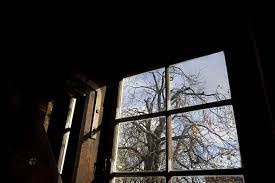
During the two years in hiding, Anne shared an intimate relationship with only one thing outside the confines of the Annex, a tree. A white horse chestnut that grew in the courtyard outside the attic window. She wrote of it often in her diary. Among my favorite entries...

AP photo/Peter Dejong
"Nearly every morning I go to the attic to blow the stuffy air out of my lungs, from my favorite spot on the floor I look up at the blue sky and the bare chestnut tree, on whose branches little raindrops shine, appearing like silver, and at the seagulls and other birds as they glide on the wind. As long as this exists, I thought, and I may live to see it, this sunshine, the cloudless skies, while this lasts I cannot be unhappy." February 23, 1944 

"Anne's Tree" survived her by 65 years, blown over in a rainstorm in 2010, after being weakened by moth/fungus infections. Before it died, visionaries at the Anne Frank House gathered chestnuts, germinated them and developed a plan to donate its saplings "to memorialize incidences of intolerance and discrimination across the United States and around the world… and tell a greater story of surmounting the obstacles of discrimination of any kind." 

Eleven saplings were designated for planting in the United States.  Little Rock, Arkansas is the only city to receive two. One at Central High School, site of the Little Rock Integration Crisis in 1957…


and the other at the Clinton Presidential Center.
I visited the Clinton Center last week, 45 minutes from our home in Arkansas, where President Clinton  helped dedicate the permanent installation on October 2. The sapling (temporary substitute while the "real" one is acclimating in a local greenhouse) stands in the center, with a picture of Anne in the foreground. 
    
She is flanked by two glass panels, etched with her words on the left and President Clinton's on the right. Three glass panels complete the illusion of a house, of containment, confinement. They stand witness to Anne's story and tell their own.         

Chief Heckaton - hereditary chief of the Quapaw during the Arkansas Indian Removal of 1830 (Trail of Tears) 
Melba Patillo Beals - one of the Little Rock Nine (African American students denied entry to all-white Central High School) 
George Takei - actor and activist (confined to Rohwer Relocation Center, Japanese internment camp, in southeastern Arkansas during WW II). 

Victims of intolerance, discrimination, hatred, prejudice.
Like Anne.
Like millions of others.

As I walked away from the exhibit, a man took my place, followed by a couple, soon to be joined by a tour group at the far side of the parking lot. 

One sapling, many voices, plead for us… to listen. 

                                                                      ************   

The Sapling Project, sponsored by the Anne Frank Center USA, launched Confronting Intolerance Today in 2013, highlighting "innovative approaches to combating intolerance." Particular areas of focus are "hate crimes, combating prejudice, tolerance and the rule of law and LGBT rights."  


ddd

Sunday, September 27, 2015

John Symons, A Voice of Peace

John Symons, a dear friend of ours, died recently. 

John and Ann Symons, Victory Day
Moscow, Russia - 2008

We met John and his wife, Ann, in Juneau, Alaska - over twenty-five years ago - when we all worked for the Juneau School District. We knew them, then, more in short greetings, "Hi, nice to see you. How are things going?" than in conversations. It wasn't until Drew, as director of the Anglo-American School of Moscow/St. Petersburg, asked Ann to interrupt her retirement and come to Russia as upper school librarian, that our relationship deepened. John came along as "Supportive Spouse," having retired a few years earlier. Ann's two-year contract at AAS extended, year by year, to six -- as ours did to seven.

In a city of 13 million, give or take a few million, we spent more time with Ann and John in Moscow than we ever did in the midst of Juneau's 30,000. Expatriate life tends to do that, bring people together quickly and cement them cohesively, in the absence of family and familiarity. The casual grocery store greeting in Alaska developed into toasts of friendship over Thanksgiving tables in Russia.


At our home in Arkansas this week, I found the basket of paper cranes John gave us.  He folded thousands of them during our time together in Moscow, pulling a square of origami paper from his bag whenever he had an idle moment.  The crane became, for John, an outward symbol of the cause he carried so passionately within -- peace.


I remember the day he opened his bag and gave handfuls of cranes to students….

John, Ann, Drew and I were chaperoning a group of AAS high school students on a trip to Egypt. On a ten-hour bus ride from Cairo to Siwa Oasis, a town about 30 miles east of the Libyan border, we stopped at El Alamein museum and cemetery. As adults, we knew little about the World War II battles that were fought in the heat and desolation of the North African desert. The students knew even less. They listened respectfully to the guide explain strategies and point out troop movements with his pointer, but we could see the "Why did we come here?" expression in their faces.

It wasn't until we stopped at the Commonwealth Cemetery that they began to make human connections… because of John. As each student stepped off the bus onto sand, he handed her/him an overflowing handful of paper cranes. "Place these on graves, and as you do, read the names and ages of the soldiers," he said. The students walked slowly, quietly among rounded headstones, reading. Within minutes, the tan landscape was dotted with color.

"They were so young."
"One soldier was only three years older than me."
"They died so far from home."
"What did they die for?"

--- reflections in journal entries shared by students


*******

Wanting to remember and honor John in some meaningful way, I selected a blue crane from the basket this morning and took it to the labyrinth in our yard. As I entered and circled toward the center, I thanked John for his devotion to peace, his voice of reason, for the good he brought into this world. I left it at the entrance, beside the cairns. Whether it decides to stay and dissolve into the earth, or fly away, its spirit of peace will spread…..along with John's.


NOTE:  Shortly after posting this story, I received an email from Ann. Another of their friends - Holly Pruett - in Portland, Oregon, also, posted a story about John and his paper cranes on her blog -- today!
Serendipity, indeed!!


Sunday, September 20, 2015

An Afternoon at the Met with John Singer Sargent

In New York City - like anywhere else - it's easy to stay home on a Sunday afternoon. Clean the apartment, catch up on email, or fall asleep as that book you've been wanting to read slips out of your hands onto the floor. All admirable options. But then, there's that brochure from The Metropolitan Museum of Art on the table, the one that's been laying around all week. The one announcing the final two weeks of the "Sargent's: Portraits of Artists and Friends" exhibit. The Metropolitan Museum of Art!! It's a forty- five minute subway ride + walk away. I haven't been there in months.

What am I waiting for?

I enter the first exhibition room to find each painting encircled by at least five people, who have apparently asked themselves the same question. Some listen to audio guides, others read commentaries beside paintings, while a few quietly whisper comments to a companion. We all patiently wait our turns for the coveted spot in front of the next piece. If we bump a bag or brush against a hand poised to take a picture, we say a polite, "Excuse me," and move on.

John Singer Sargent,  Self-Portrait (1886)

John Singer Sargent received high praise during his own lifetime, but would undoubtedly be complimented by such reverent admirers, ninety years after his death. He is often referred to as "the leading American portraitist of his generation"(1856-1925). I'm unfamiliar with portrait painters who came before or after, but I can scarcely imagine any more gifted. Examples in the Met exhibit include:

Madame X (Madame Pierre Gautreau)
Carolus-Duran (one of Sargent's teachers)


William Butler Yeats

As admirers, we each pause longer in front of one painting than another, for reasons we might be hard-pressed to explain. Is it the subject, the technique, an expression or setting? Or a feeling, perhaps.

 I stopped at each of the ninety-two paintings, and returned to two.

A Gust of Wind

The first was a portrait of a woman - not seated in a chair, or posed as a statue - but on the move, outdoors, holding her hat in place as she strides through the grass. I want to know her story. Where is she going, and might I tag along? The commentary describes it as "one of Sargent's most daring compositions - freely painted and boldly abbreviated." Perhaps his subject was equally daring to move beyond a life of expectations.

The second could have been voted "The Most Unlikely To Get A Second Notice." It is unfinished.

Woman and Collie

A dog with his kind face and tongue hanging out; a faceless woman bending forward -- a friend, mistress, stranger? With only a few brushstrokes, Sargent began a portrait of companions, then "abandoned the composition before completing it." No reason why. He has left us to continue their story. As a writer, I'm intrigued by the challenge… yet more intrigued by Sargent's ability to capture my imagination, by what he has left undone.

I'm almost out the museum's front door when I turn around. I reach in my purse for my credit card, then walk to the membership desk. "I'd like to renew my membership, please."

 Next time, it's….

American Quilts and Folk Art
Ancient Egypt Transformed
Celebrating the Arts of Japan
Or
Or
Or


Wednesday, June 10, 2015

My Labyrinth - Finished!


My labyrinth is finished!! 

A year after I dug the first trench and laid the first brick, it's finished. Those of you who read my blog postings last summer, "My OWN labyrinth," Parts One and Two, probably assumed that it was finished long ago, that I have been peacefully walking it ever since. I had assumed as much myself. But then came the August morning when I spent forty-five minutes unearthing two hulking rocks, only to discover a network of entrenched tree roots underneath. I threw my shovel in the air, plopped down on one of the rocks, and reached for my phone.
"So, Ben, what was your plan, again?" I asked our son-in-law who had tactfully suggested an alternative to my dig-a-trench method earlier in the planning process.
Without a hint of "I-told-you-so" in his voice, Ben outlined the plan that I was, by then, more than happy to embrace.
No more digging!

Eight months passed. Eight months when the ground lay quiet, when I quieted myself. My initial drive to "get this done now" and "my way" gradually calmed, much like my breathing during meditation. In the mindfulness that followed, I realized what - in my haste - I had forgotten... the two most important elements I wanted my labyrinth to represent. Peace and community.

As dogwood and redbud bloomed and green replaced brown, my family and I set a date, April 11th. Ben calculated amounts. I researched sources and ordered supplies.

9 yards of topsoil
1165 bricks (Did I mention that Ben majored in math?)


155 rolls of Bermuda sod

                                                    Then the creation began!

Clearing away the remnants of Plan A, then tilling (Drew)

Schlepping (son Jason)
Measuring ( Jason, Ben and grandchildren Luke and Ruby)


Laying bricks (Ben, Jason and I)
                                           
Adding the last piece of sod - Done!
Cutting and placing sod


When I open our bedroom blinds in the morning, I look down on the completed labyrinth. It waits for me to walk. As I place one foot in front of the next, I remember a husband's enduring support, a grandchild's hands, a son's strength, a son-in-law's vision, a family's love. And I whisper, "Thank you!"


Saturday, February 28, 2015

Clementine Hunter, Folk Artist

The book caught my eye the minute I walked into the children's section of the Harlem library, two years ago this month -- Black History Month.


Who was Clementine Hunter? The African American woman on the cover intrigued me. There was a directness to her stare, yet kindness in her eyes, humility in the way she cradled a collection of paintbrushes in her hands. Like she was proud, but uneasy with the attention.

When I removed the book from the shelf, settled into a child-size chair and started reading, I had no idea that Clementine would eventually lead me to Melrose Plantation in Louisiana.
She lived 85 of her 100 years (1888-1988) on the grounds of  Melrose, about 25 miles from Natchitoches, working as a manual laborer - picking cotton, harvesting pecans, cleaning, washing, cooking. Similar work that her Grandmother Idole had done, as a slave. She attended school for only ten days, and never learned to read or write.

Clementine had lived half her life before she painted her first picture on a window shade, using brushes and tubes of paint discarded by an artist staying at Melrose. Another guest at the plantation, Frances Mignon, encouraged her to paint more. For the next fifty years, she produced between four and five thousand paintings, on whatever she could find - bottles, cardboard, brown paper bags, roofing shingles, canvas. She drew what was in her memory.

The artist's first exhibit was on her porch and clothesline. The sign on the front of her house said,

C. Hunter
Artist
Paintings for Sale 


She sold her first paintings for 25 cents.

As the years passed, Mignon helped Clementine promote and sell her work. Her reputation as a folk artist grew, and her paintings were displayed in galleries miles from her front porch and clothesline. Today they can be found in museums and galleries all over the United States and sell for thousands, up to tens of thousands, of dollars. 

I ordered a copy of Art From Her Heart and placed it, cover-side out, on our bookshelf so I could see Clementine each time I sat down to write. A woman who didn't start painting to become wealthy, lauded, or to have a United States' president invite her to the White House. 
She painted because it was in her to do it.    


A year and half later, I was mapping my trip to Baton Rouge, Louisiana to visit the 49th labyrinth on my 50-state journey and interview its creator. I looked up at Clementine and wondered, "How far away is Melrose from Baton Rouge?" I had read that the plantation is now a National Historic Landmark and that several of Clementine's paintings are on display. "Two hours and thirty-two minutes," Google responded.

The morning of June 13, 2014, I drove along curvy Louisiana back roads from Natchitoches to Melrose, arriving fifteen minutes before the plantation opened. The day's first visitor, I parked in the dirt lot beside the gated entrance, got out and walked under huge pecan trees - ones from which Clementine had likely gathered sacks full of nuts. I joined the first tour and listened politely as the guide explained the plantation's history, eager for him to get to Clementine's part. As we stood on the upstairs porch, he walked over to a door, placed his hand on the knob and said that we were about to enter a room in which some of her paintings were displayed. "No photos, please," he added.

I walked in the sunlit room and instantly felt like I was surrounded by a rainbow. Clementine's bright colors sparkled, pure and honest, directly from their tubes onto canvas and bottle. The scenes of  every day life - picking cotton, getting married, playing cards - began telling their stories, as if delighted to have the door opened, new faces to greet. And the zinnias… purple, orange, white, yellow, red!

Without photos in my camera, I wanted something to take away with me, a reminder of the joy I experienced in the midst of Clementine's art. I stopped at the gift shop. Posters, muted notecards, nothing that felt real. Until… I spotted an original painting perched on a window ledge. Yellow zinnias in a red pot.

"Who painted this?" I asked the clerk.

"Clementine Hunter's grandson, James. She taught him how to paint," she answered.

"I'll take it!" I said, and gently took it off the ledge.


************

Three of Clementine's paintings shown in Art From Her Heart by Kathy Whitehead.


Sunday, December 21, 2014

Holiday Wishes!

During this holiday season, I wish you a day as peaceful as I experienced last Saturday at The New York Botanical Garden, filled with….. 


Undisturbed solitude


Smooth transitions


                                                         Delightful companions


And a line of poetry that touches your soul

(Former United States Poet Laureate, Billy Collins, read selections from his newest collection, Aimless Love. His poems are dotted throughout the Garden during the holiday season.) 


Watercoloring
by Billy Collins

The sky began to tilt, 
a shift of light toward the higher clouds,
so I seized my brush
and dipped my little cup in the stream,

but once I streaked the paper gray
with a hint of green,
water began to slide down the page,
rivulets looking for a river.

And again, I was too late--
then the sky made anther turn,
this time as if to face a mirror
held in the outstretched arm of a god.


Sunday, December 7, 2014

A Winding Road to the Lower East Side Tenement Museum

I exited the #6 train on Spring Street with directions in hand to the Tenement Museum at 97 Orchard Street on the Lower East Side. A ten-minute walk. Twenty minutes later I was ???
I should have crossed Delancey (isn't that a movie?), then taken a right on Orchard, but Delancey was no where in sight. Almost to Canal, I knew I was headed the wrong way, so I stopped in a jewelry store for directions. A helpful saleswoman pointed me down the sidewalk I had just walked. (She was Chinese. I'll explain why that is significant later.)
"It's the big, busy street. You can't miss it," she said.

I retraced my steps, carefully reading each street sign along the way, only to find myself back at the subway stop. No big, busy street. No Delancey sign.

Again, I asked for directions.
A man loading paint cans on a dolly, looked up when I said, "Excuse me. Can you tell me where Orchard Street is?" (Forget Delancey. It apparently had disappeared.)
In a pronounced Swedish accent, he said, "Let me look on my phone." After a couple of swipes, he pointed, "That way, toward Delancey."
"Thank you, but I just came from there, and no Delancey!" My morning mindfulness mediation was wearing thin, and I was already late to meet my friend, Marian, and her sister, Marjie.
"Oh, Kenmare turns into Delancey," he explained. "Follow Kenmare and you'll see it."

Kenmare I had seen, twice.

A few blocks down Delancey, and I should have encountered Orchard, but…
Is this sounding familiar?

I stopped for a third time, entering a shoe store, where two African-American men greeted me from behind the counter.
"Am I anywhere close to the Tenement Museum on Orchard?" I asked.
"Sure, on the other side of Delancey," one of them answered.

Thanking them, I crossed Delancey, walked thirty seconds, and there - finally -  was my destination! Half an hour late, but still in time for our tour, "Sweatshop Workers."


Around the corner from the museum's visitor center, Marian, Marjie and I stood with a group of ten others in front of a door. The door to a five-story tenement building which housed nearly 7000 people from over 20 countries between 1863 and 1935.


A sign hung to our left, beginning the story we were to hear in the next hour.


When the door closed behind us, I imagined being one of the 7000 who walked into this dark, narrow hallway. Would have I been grateful to have a roof over my head? Would I have wanted to turn around and run? Pray? Rejoice? Where would I have summoned the strength, not only in my legs but in my heart, to climb the steep bannistered stairways to my tiny tenement home and my new life?

When Marian and I visited Ellis Island last month, we learned that as a result of the 12 million immigrants who traveled through its gates, approximately 100 million descendants populate this country. And their number continues to grow with each generation. As I stood in two of these family's apartments and heard their stories, I was inspired by the lives they created - despite the hardships they endured. I was proud of a country, my country, that provided them opportunities, and valued their contributions.

But America is not only my country.  It belongs as much to the Chinese woman, the Swedish man, the African-American men who pointed me along my way -- ironically, to an immigrant museum.
One building among hundreds like it, where people built their lives and the life of a nation.

************
Today's immigrants, like their predecessors, are transforming the neighborhood - and challenging us to provide new answers to old questions. Who is American? What does it mean to be a citizen? What is our responsibility to those in need? What should "home" look like? It is their future that gives the past  -  a past that this Museum studies and celebrates - such resonance.
-- A Tenement Story
{The History of 97 Orchard Street and the Lower East Side Tenement Museum}

Photo credit - Tenement Museum


Web Analytics